Flooring Solution
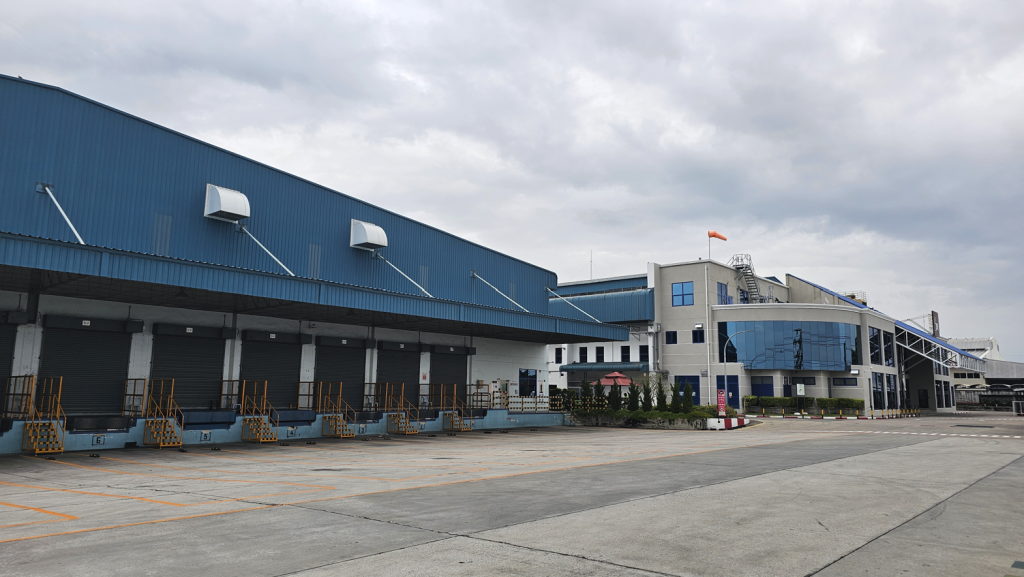
A coffee manufacturing facility in Thailand, producing coffee products for domestic and export markets. The facility handles dry powder blending, mixing and sachet packaging operations across multiple production lines.
Production involves the handling of coffee powder, creamer powder and sugar across continuous blending and packaging processes. The existing floor substrate was untreated or inadequately coated concrete, presenting hygiene and durability risks incompatible with food safety requirements.
FLOORFINDER UNIVERSAL was applied across the production, blending and processing zones to address these deficiencies.
THE CHALLENGES: OPERATION & HYGIENE DEMANDS
Coffee powder manufacturing exposes the production floor to a specific combination of dry and wet stressors that standard flooring systems are not designed to handle:
- Fine coffee, creamer and sugar powders settle continuously on floor surfaces and penetrate porous concrete, making thorough cleaning difficult and creating long-term contamination risk.
- Sugar residues become sticky when moisture is introduced during cleaning cycles, creating conditions for bacterial growth on surfaces that are not fully sealed.
- Creamer powder contains dairy-derived fats that deposit on floor surfaces and require thorough chemical cleaning to fully remove.
- Cleaning chemicals including alkaline detergents, degreasers and sanitisers are used in routine washdowns, degrading unprotected concrete surfaces over time.
- Wet washdown cycles introduce significant moisture into a primarily dry production environment, creating penetration risk on porous or cracked substrates.
- Continuous mechanical load from blending equipment, conveyors, pallet jacks and personnel across production, blending and warehouse areas.
The untreated concrete substrate was porous and unable to be fully sanitised, presenting a direct risk to hygiene compliance and food safety audit outcomes.
SOLUTION IMPLEMENTED
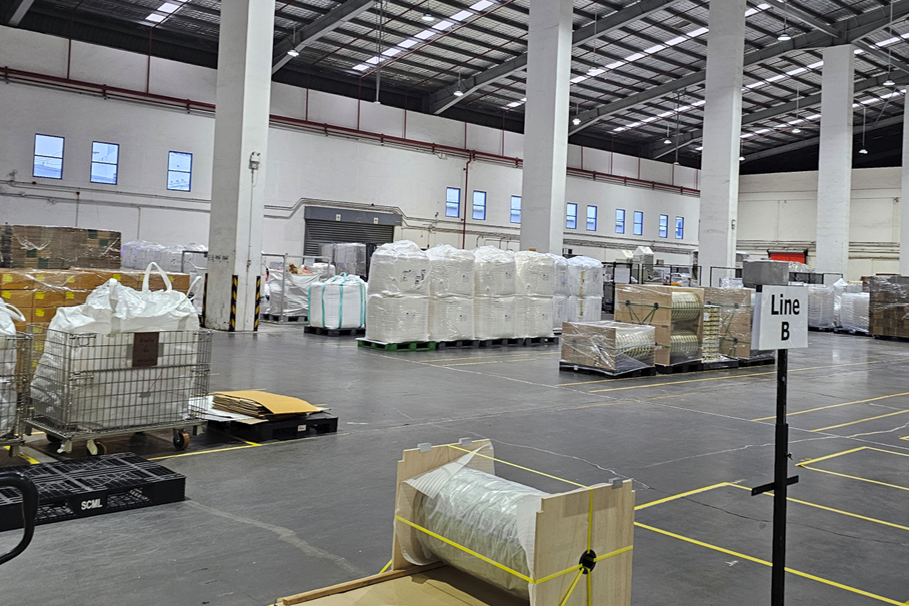
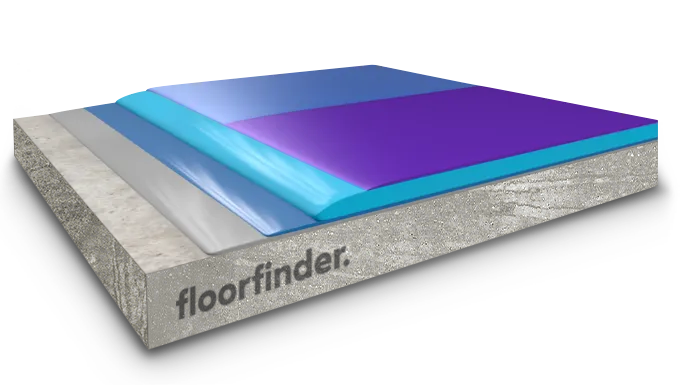
1. Mechanical grinding and shot blasting were carried out to remove surface contamination and establish the substrate profile required for the system to bond correctly. Low-VOC preparation methods were applied to
2. Primer was applied to seal substrate porosity, eliminating the ingress pathways that allow fine coffee, creamer and sugar powder to penetrate below the surface and become a contamination risk.
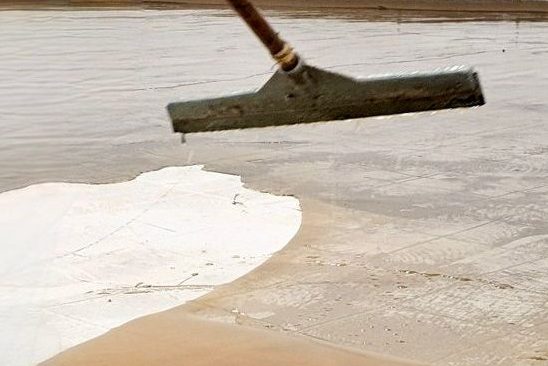
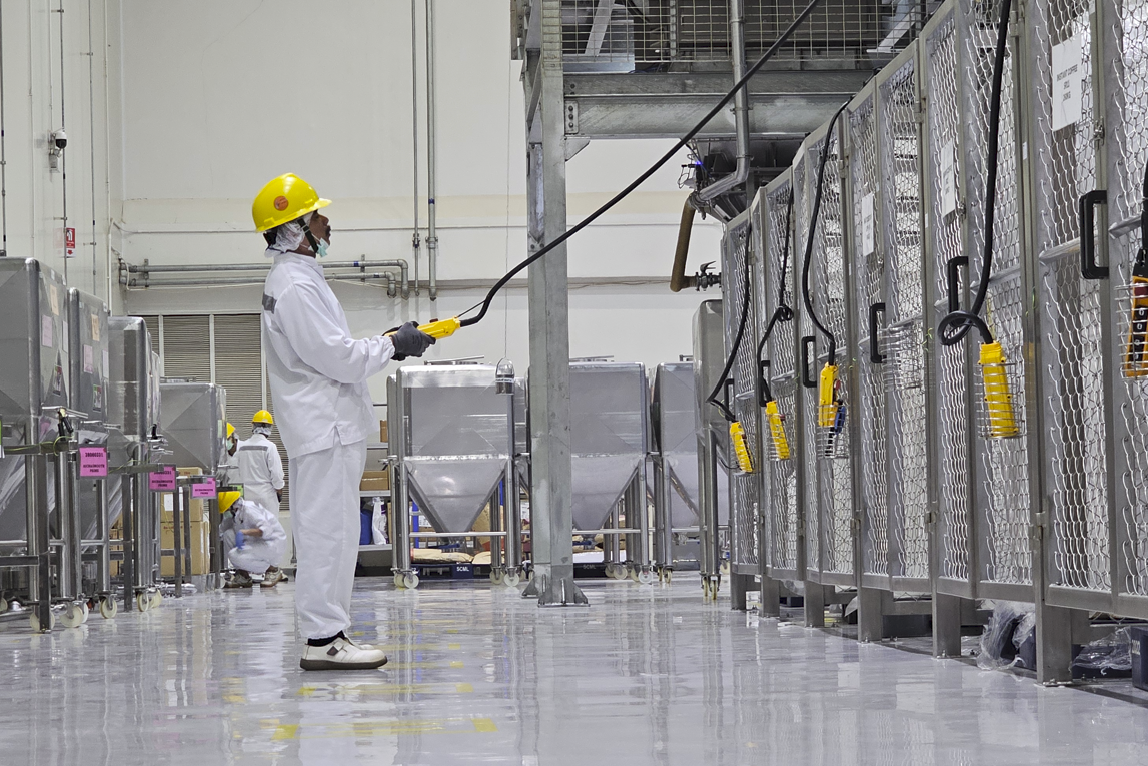
3. Scratch coat was applied to level surface irregularities, eliminating low points where powder residues and washdown liquid can accumulate and be difficult to fully clean.
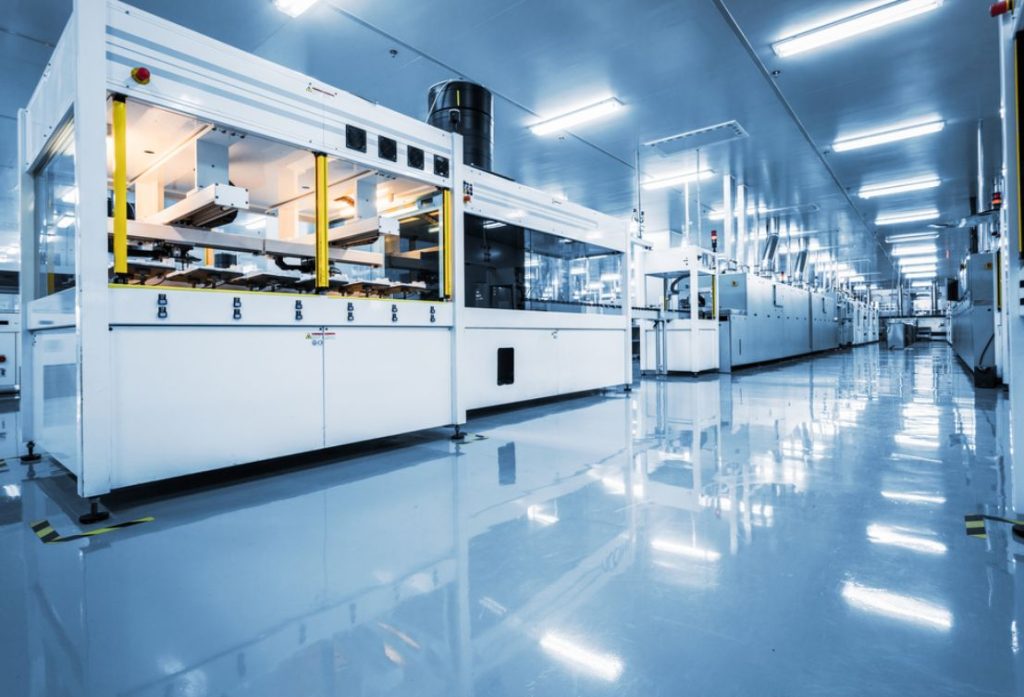
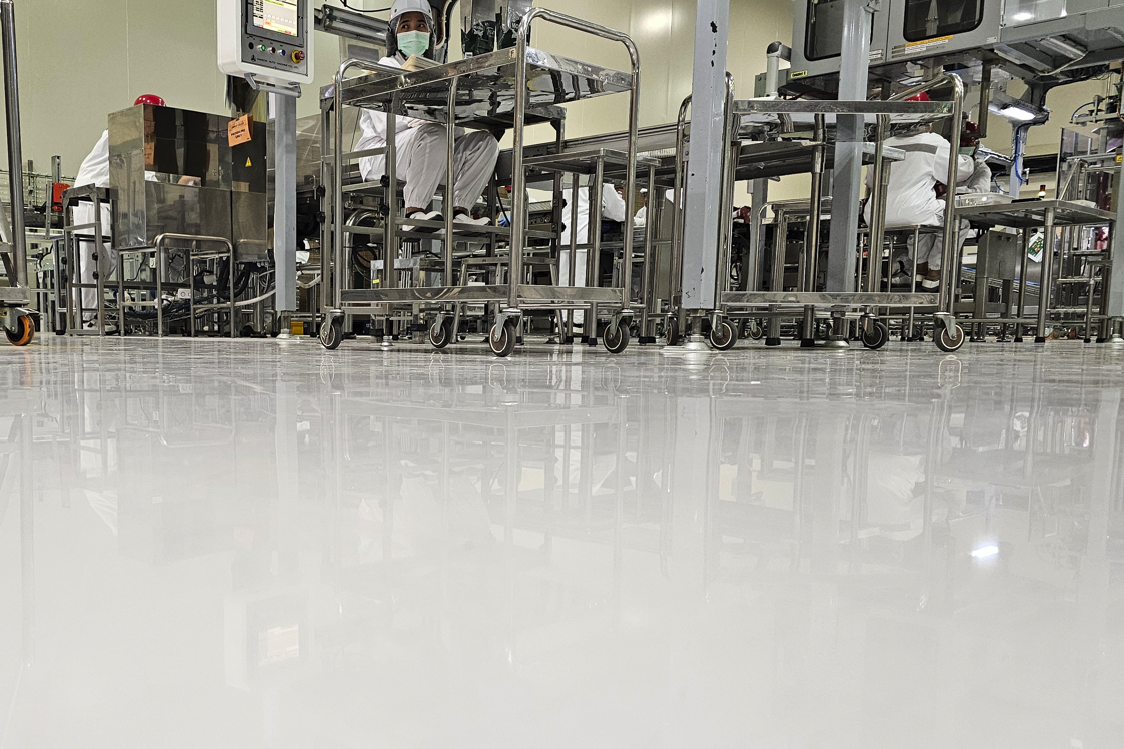
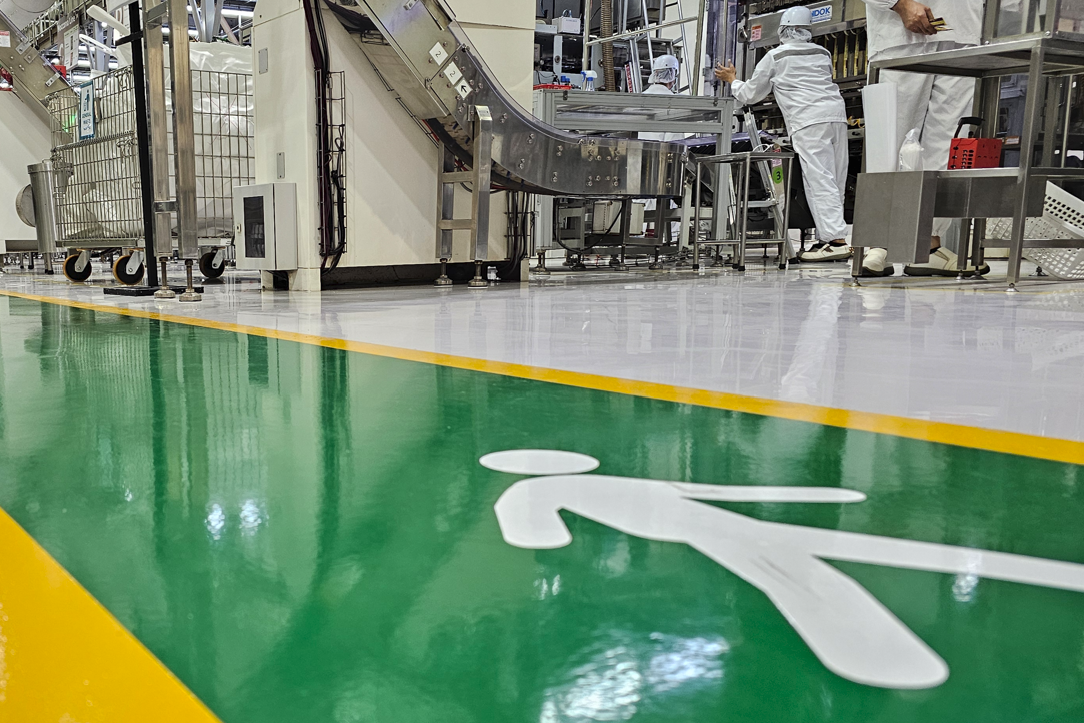
4. The self-leveling topcoat delivers a seamless, non-porous, high-gloss finish that prevents the harbourage of powder and residue on the floor surface. The system’s chemical resistance withstands daily use of alkaline detergents, degreasers and sanitizers.
5. Floor Marking & Zoning
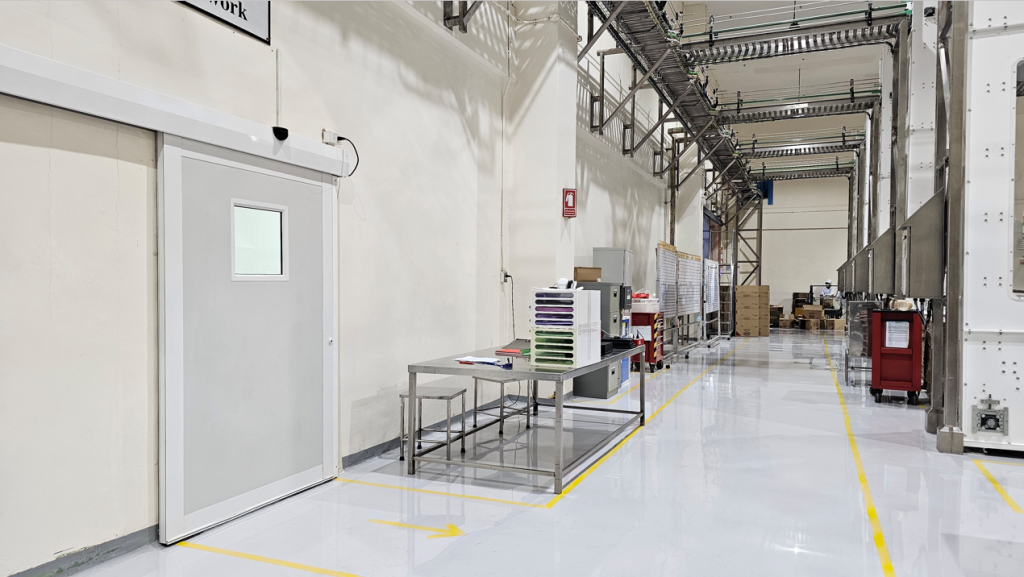
Line markings, pedestrian walkways and zone boundaries were applied across production and warehouse areas, supporting hygiene zoning, personnel safety and audit compliance across the full facility.
OUTCOME
The installed FLOORFINDER UNIVERSAL system provides a cleanable, hygienic and durable surface across the facility’s production and blending areas. The seamless, non-porous finish eliminates the surface vulnerabilities present in the prior concrete substrate, reducing maintenance demands and supporting the facility’s ongoing food safety compliance and audit readiness.
Key Takeaways
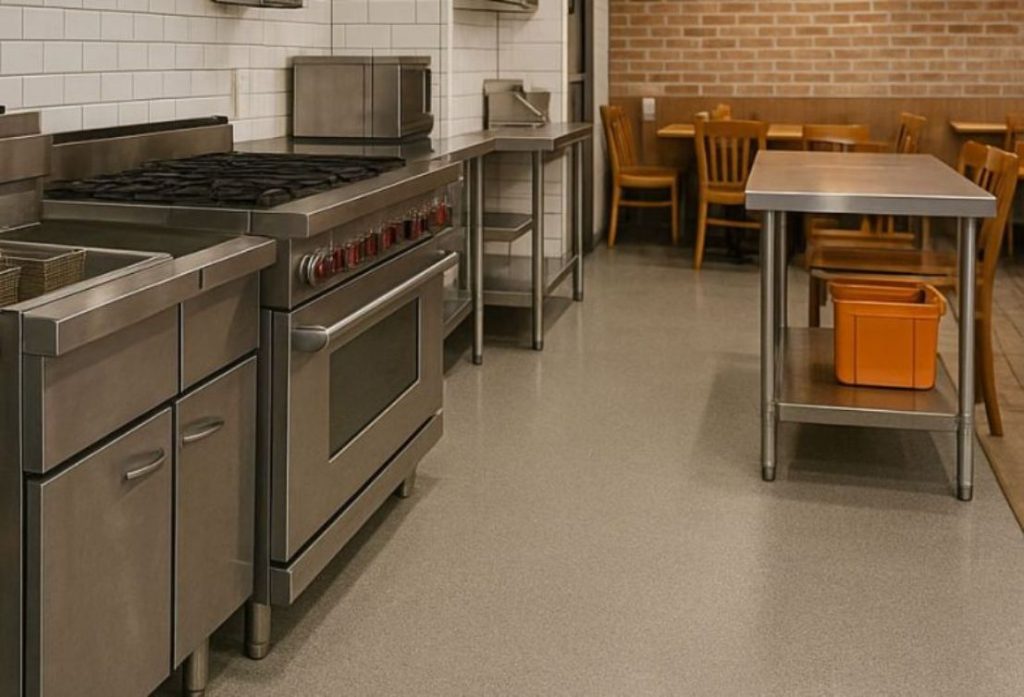
- FLOORFINDER UNIVERSAL seamless finish provides a professional front-of-house look while maintaining heavy-duty durability. It is easily customized with a broadcast aggregate to meet non-slip requirements in wet processing areas while preventing the trapping of coffee grounds.
- The high-impact and abrasion resistance withstands constant forklift and pallet jack traffic, while its impermeable barrier prevents staining from coffee concentrates and common cleaning chemicals.
- The self-leveling, fast-install properties minimize facility downtime. The durable, liquid-tight surface lasts 10–20 years, significantly reducing total lifecycle costs compared to maintaining tiled or concrete floors.